







 Kubernetes
The industry-standard platform for automating containerized application management.
Overview
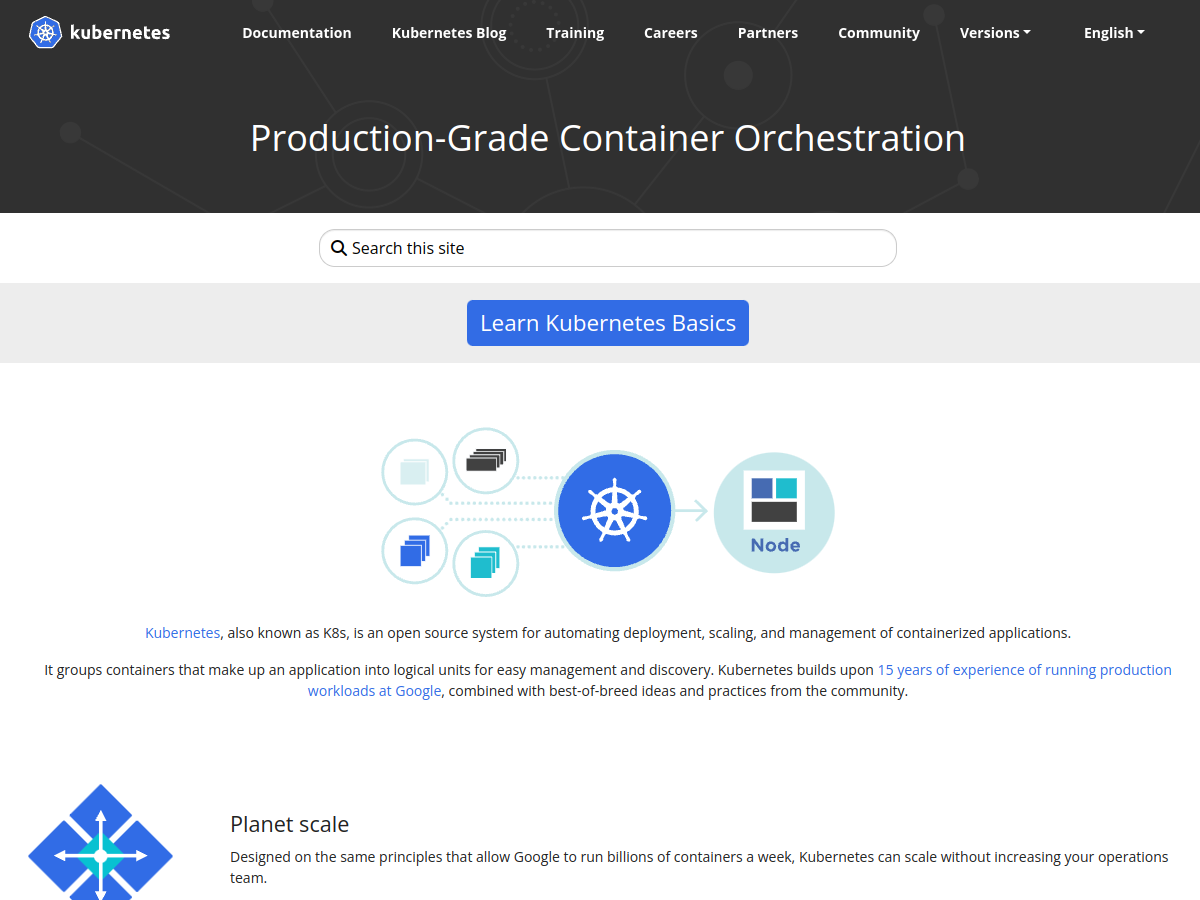
Kubernetes, also known as K8s, is an open-source system for automating the deployment, scaling, and management of containerized applications. Originally developed by Google and now maintained by the Cloud Native Computing Foundation (CNCF), it has become the de facto standard for container orchestration. Kubernetes allows teams to manage clusters of hosts and ensures that applications are always running as intended.
Key Capabilities
- Service Discovery and Load Balancing: Automatically exposes containers and distributes traffic.
- Storage Orchestration: Automatically mounts various storage systems (local, public cloud, etc.).
- Automated Rollouts and Rollbacks: Describe the desired state and K8s changes the actual state.
- Self-healing: Restarts containers that fail, replaces and kills containers that don't respond.
- Secret and Configuration Management: Store and manage sensitive info without rebuilding images.
Scalability and Portability
Kubernetes is designed to handle everything from small clusters to massive global infrastructures. It provides a consistent layer of abstraction over diverse infrastructure providers, whether on-premises, hybrid, or multi-cloud. By decoupling applications from the underlying hardware, Kubernetes enables true portability and high availability for modern, distributed software systems.





An open platform for developing, shipping, and running applications in containers.